
Intermediate First Aid Course Benefits Explained

When a coworker collapses, a child has a severe allergic reaction, or an injury becomes more serious than expected, the first few minutes matter. Intermediate First Aid course benefits go beyond checking a certification requirement. They give people a structured way to recognize hazards, respond with confidence, provide appropriate care, and communicate clearly until emergency services take over.
For many Edmonton workers and safety-conscious adults, Intermediate First Aid is the right step when basic training no longer feels sufficient for the responsibilities they carry. It combines practical first aid knowledge with CPR and AED skills, while giving learners more time to practice the judgment and hands-on techniques that real emergencies demand.
What Intermediate First Aid Adds to Your Skills
Intermediate First Aid is designed for people who need more than a short introduction to emergency response. While course content can vary by certifying organization and workplace requirements, intermediate-level training generally provides a broader foundation for responding to medical emergencies, injuries, and environmental risks.
The difference is not simply more material. It is more opportunity to connect the steps. Learners practice assessing a scene, checking a person’s condition, deciding what requires urgent action, and continuing care while help is on the way. That sequence matters because emergencies rarely arrive in a neat, predictable form.
CPR and AED training are a central part of this preparation. Participants build familiarity with responding to an unresponsive person, using an AED safely, and working through the early moments of a cardiac emergency. Repeated practice helps replace hesitation with a clear response process.
Intermediate training also addresses a wider range of injuries and illnesses than a brief emergency course. Depending on the approved program, this may include bleeding, shock, fractures, burns, poisoning, sudden medical conditions, breathing emergencies, and head or spine concerns. The goal is not to turn participants into medical professionals. It is to help them provide safe, informed first aid within their role.
Intermediate First Aid Course Benefits for Workplaces
A strong first aid program supports more than compliance. It helps create a workplace where people know what to do before a situation becomes worse. For employers, that begins with having trained staff who can respond promptly and appropriately while emergency services are contacted.
One of the most practical Intermediate First Aid course benefits is better role readiness. Employees may be required to act as designated first aid attendants, supervisors may need to manage an incident before help arrives, and team members may work in locations where medical care is not immediately available. Intermediate training gives those individuals a deeper level of preparation than an entry-level course.
It can also support a calmer response across the team. A trained person is more likely to take control of basic tasks such as making the area safe, calling for help, gathering necessary supplies, monitoring the injured person, and directing bystanders. Clear action can reduce confusion at a time when everyone else is looking for direction.
For organizations, the appropriate course level depends on the work environment, the number of employees, access to emergency medical services, and applicable occupational health and safety requirements. An office close to emergency care may have different needs than a construction site, childcare setting, warehouse, school, or community program. Employers should confirm their specific requirements rather than assuming that one certificate fits every role.
Recognized Certification Can Support Career Goals
Many learners register because a job posting, employer, practicum, or professional program requires valid first aid and CPR training. A recognized certificate from an established training organization gives employers a clear way to verify that the learner has completed a standards-based course.
This is especially useful for childcare providers, teachers, support workers, security personnel, recreation staff, tradespeople, workplace safety representatives, and people entering health-related fields. Even when intermediate certification is not mandatory, it can show that a candidate is prepared to take responsibility in a safety-sensitive setting.
Credentials should never be treated as a one-time box to check. First aid skills can fade when they are not used. Keeping certification current helps learners refresh procedures, practice CPR again, and stay aware of changes in training standards. Before registering, check whether an employer specifies a particular certifying body, course level, CPR level, or renewal pathway.
Phoenix First Aid & Fire offers recognized training options through the Canadian Red Cross and Heart & Stroke Foundation of Canada, helping learners choose a course that matches their workplace or career requirements.
Confidence Comes From Practice, Not Just Information
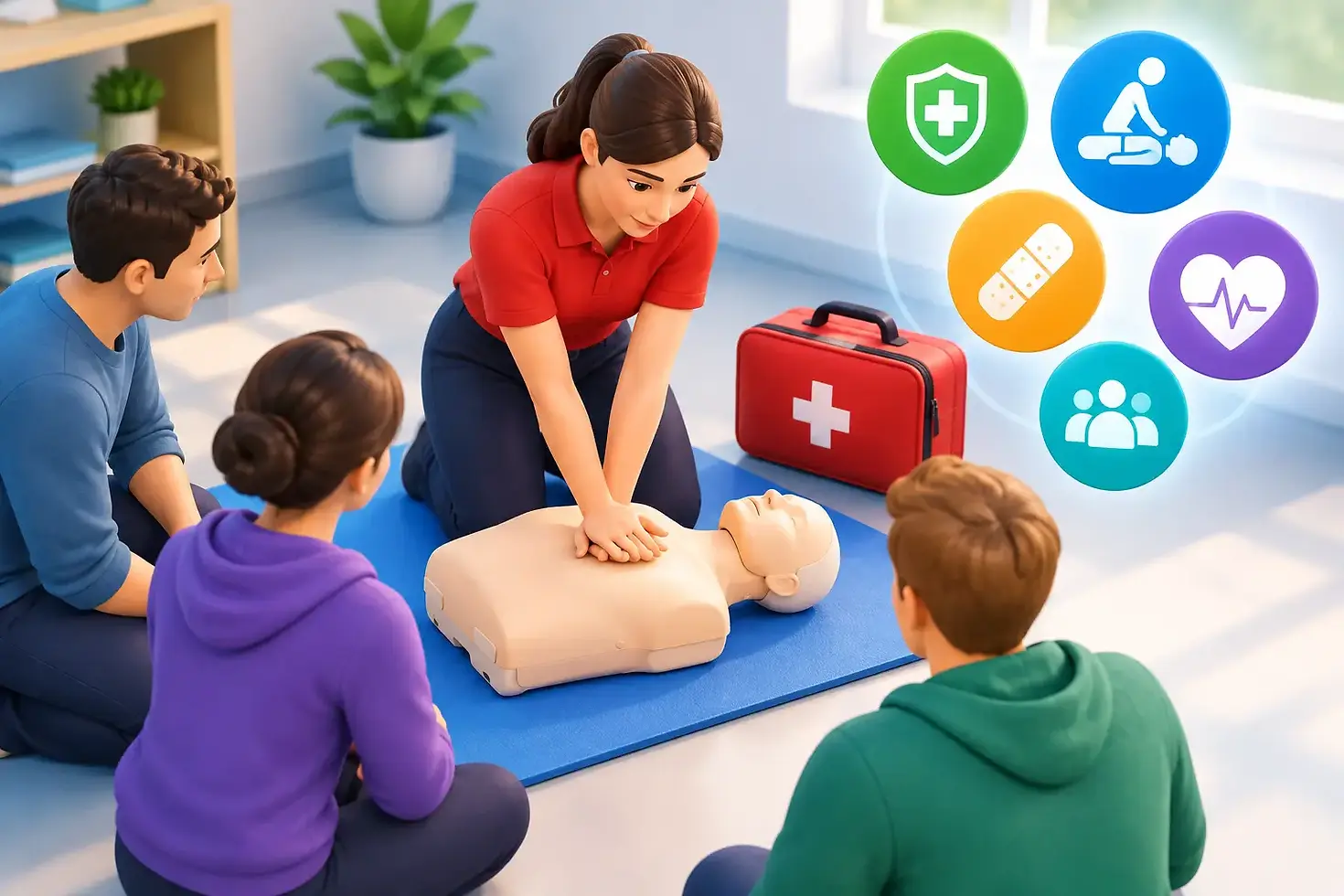
Reading about first aid is valuable, but it does not fully prepare someone for the physical and emotional demands of an emergency. A quality classroom course gives participants time to practice skills with instructor guidance and to ask questions about situations they may actually encounter.
That practice matters when a task feels unfamiliar. Performing chest compressions, placing AED pads, controlling bleeding, or helping someone with a suspected fracture requires more than remembering a definition. Learners need to understand the order of actions, the limits of their role, and when professional medical care is essential.
Scenario-based learning adds another useful layer. It asks participants to think through a situation rather than wait for an instructor to provide every answer. A person may need to decide whether a scene is safe, whether to move someone, whether to call emergency services, or how to respond when more than one person needs help. The exact answer depends on the situation, but training gives people a reliable framework for making safer decisions.
Confidence does not mean assuming you can handle every emergency alone. It means knowing how to begin, knowing when to get help, and staying focused on the person in front of you.
Who Should Consider Intermediate Training?
Intermediate First Aid is often a practical choice for adults whose work involves responsibility for others or a greater chance of injury. This can include people working with children, public-facing teams, supervisors, industrial and construction employees, coaches, community staff, and anyone appointed to a workplace safety role.
It is also a good fit for people who want stronger personal preparedness. Parents, caregivers, volunteers, and outdoor enthusiasts may appreciate the broader skills and longer practice time. A serious medical emergency can happen at home, at a sporting event, in a parking lot, or while traveling just as easily as at work.
However, more training is not always the only answer. If an employer only requires a shorter course, or if a learner needs a simple introduction before taking a more comprehensive class, an Emergency or Basic First Aid option may be appropriate. The best choice is the one that meets the required standard and gives the learner skills they can use with confidence.
How to Choose the Right Course With Fewer Surprises
Before you register, start with the reason you need certification. Ask your employer, school, or professional program whether it requires a specific course name, CPR level, certification body, or expiration period. This avoids completing a course that is valuable but does not meet a stated requirement.
Next, consider the setting where you are most likely to use the training. A learner responsible for children may need childcare-focused content. A healthcare professional may need BLS CPR. Someone serving as a workplace first aid attendant may need an intermediate course that meets workplace standards. Course descriptions and a knowledgeable training provider can help clarify the difference.
Finally, choose a provider that offers recognized certification, clear scheduling, and experienced instruction. Convenience matters, particularly for working adults, but course quality matters more. You want to leave training with a valid credential and a practical understanding of what to do when someone needs help.
A Skill Set You Carry Beyond the Classroom
The value of Intermediate First Aid is not limited to the certificate you receive at the end of class. It is the ability to notice when something is wrong, make the area safer, call for appropriate help, and provide care without adding risk.
That preparation can support a workplace, strengthen a resume, and bring reassurance to the people who depend on you. Choose training that fits your responsibilities, practice the skills seriously, and keep your certification current so you are ready to act when a moment calls for it.


Comments